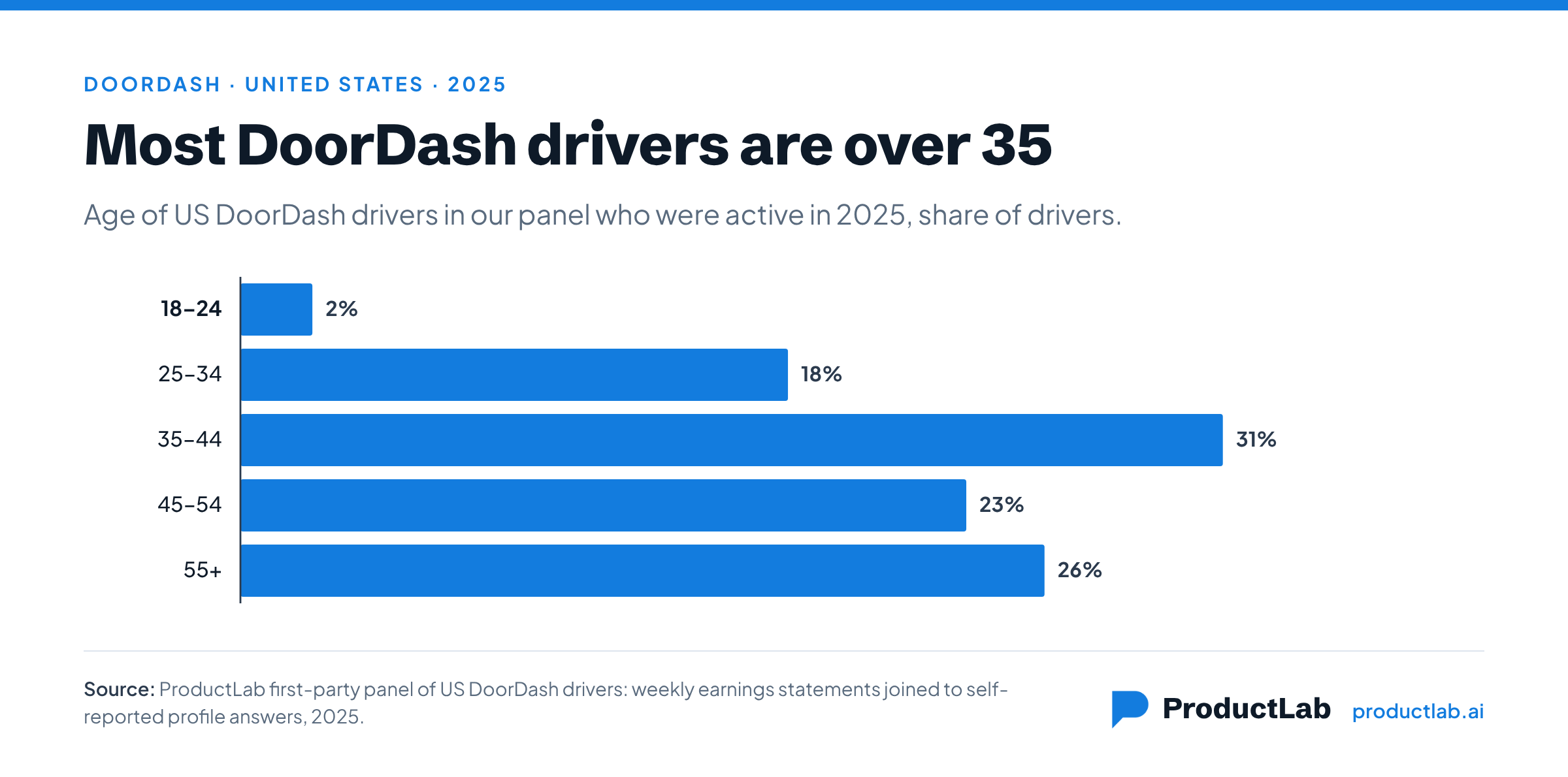
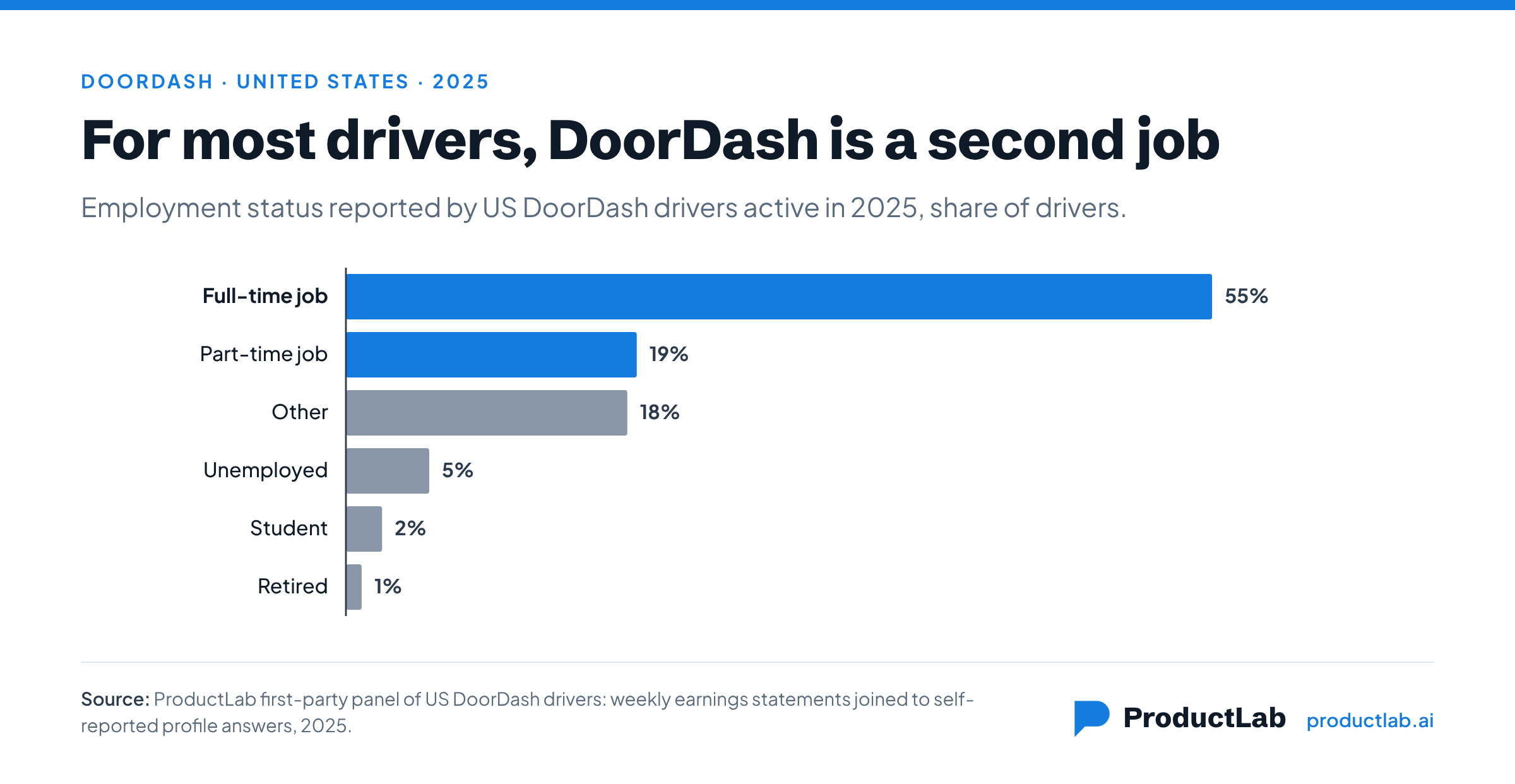
The short version: the typical DoorDash driver isn’t a college kid with a free evening. In our 2025 panel, four in five drivers were 35 or older, and nearly three in four already had another job. For most, DoorDash is a second paycheck.
This profile joins two kinds of data sourced directly from ProductLab’s first-party panel of consumers: the weekly DoorDash earnings statements drivers share with us, and the profile questions they answer about themselves. It covers US drivers active in 2025.
Most drivers are over 35
Drivers aged 35 to 44 were the largest group, at 31% of the panel. More than a quarter were 55 or older, and only about 2% were under 25. Older drivers also worked slightly longer weeks than drivers in their late thirties and early forties.
For most, it’s a second job
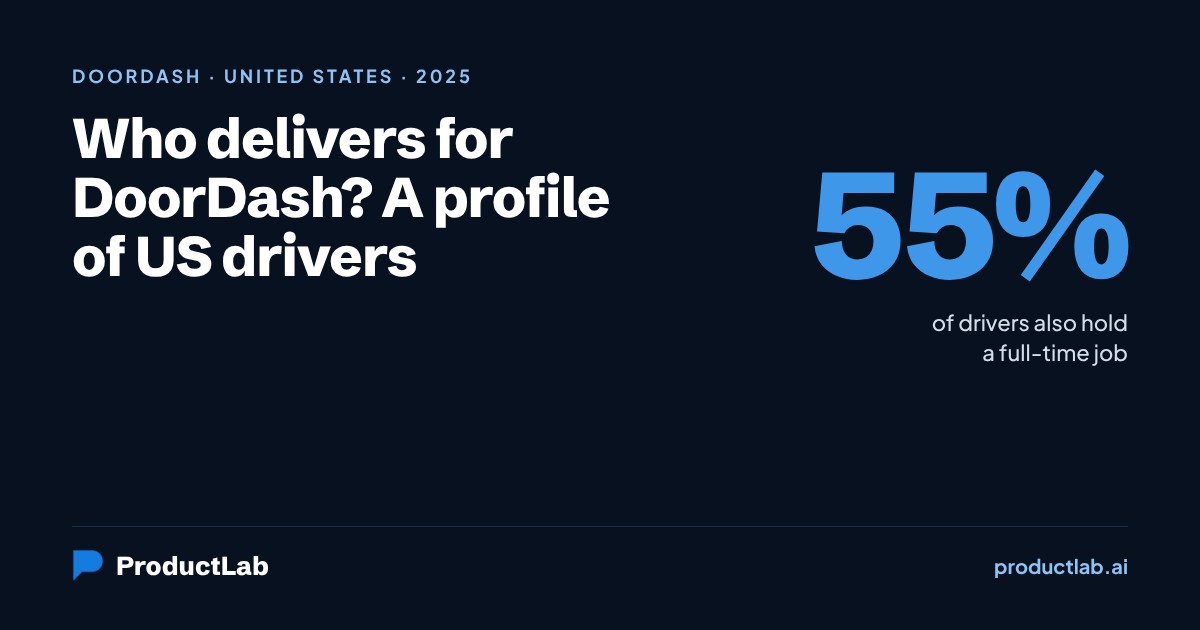
55% of drivers said they work full time, and another 18% part time. Only about 5% said they were unemployed. That fits the hours we see: the median driver logged about 10 to 11 hours a week on DoorDash.
Household incomes skew modest. Just over half of drivers reported household income under $50,000, and about one in ten reported $100,000 or more. Most drivers rent their home (about six in ten), and nearly half live in the suburbs; about a third are in cities and one in six in rural areas.
Men drive more hours, and earn a little more per hour
About six in ten drivers who reported their gender were men. Men logged more time on the app, a median of 12.1 hours a week versus 9.6 for women, and earned about 6% more per hour logged in ($11.25 versus $10.66). Per hour actively delivering, the gap was wider, about 10%.
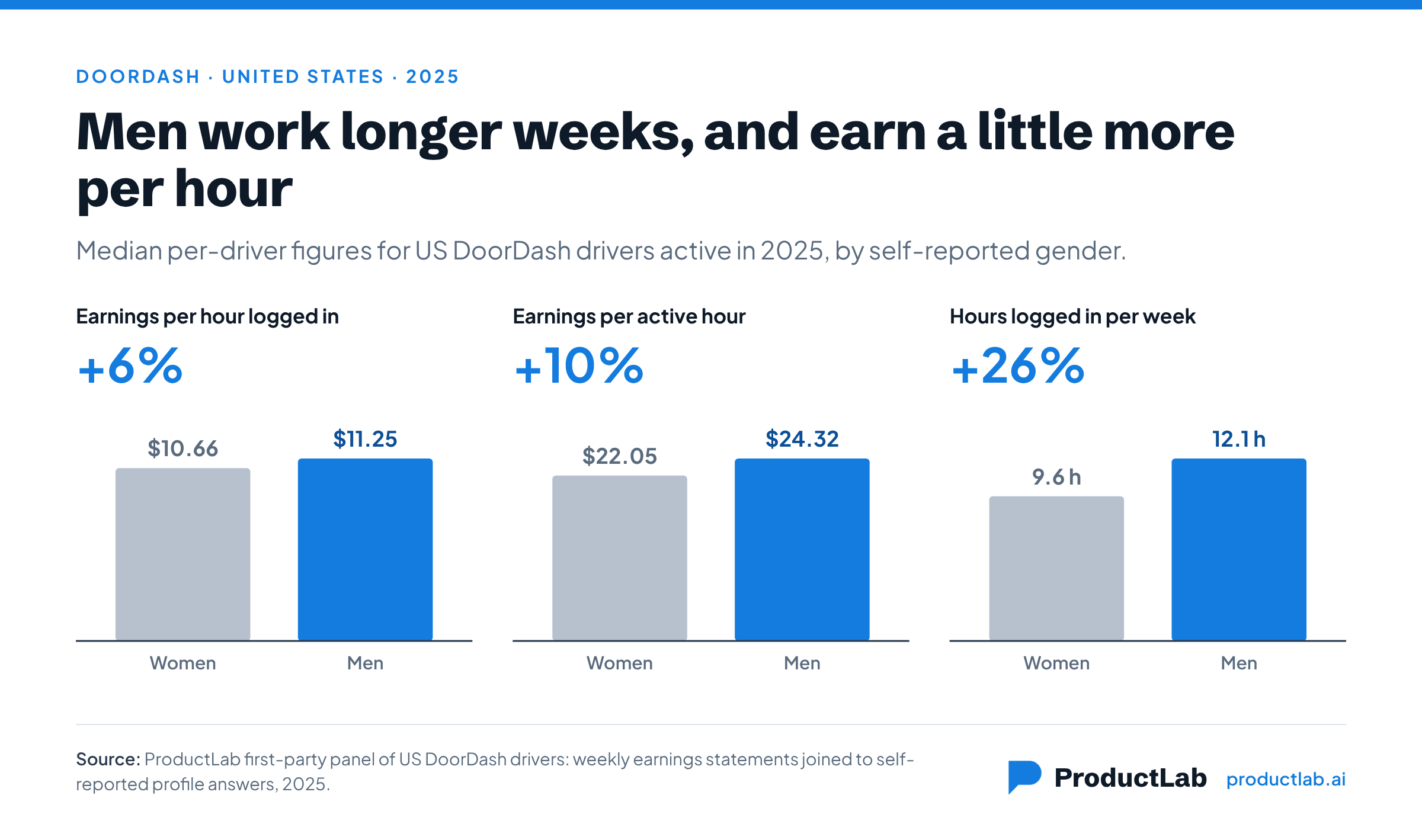
These are raw comparisons. They don’t account for where, when or which orders each driver chooses, all of which affect pay. Suburban drivers, for example, earned more per hour logged in than city drivers ($11.69 versus $10.24), while city drivers worked longer weeks.
About the data
This analysis uses data sourced directly from ProductLab’s first-party panel of consumers: US DoorDash drivers who share their weekly earnings statements and answer profile questions in the ProductLab app. Shares exclude drivers who skipped a question or preferred not to answer. Earnings are each driver’s median week in 2025, then the median across drivers, so they differ slightly from week-level figures in our other reports.
Drive for DoorDash, Uber Eats or Instacart? Join the ProductLab panel and get paid to share your earnings. Need gig-worker data for your business? Talk to our data team.