The short version: a DoorDash delivery in the US paid about the same in 2025 as it did in 2023. What changed is how many of them a driver gets. Drivers completed fewer orders for every hour they were logged in, spent more of their shift waiting, and worked longer weeks to take home roughly the same pay.
These numbers come from ProductLab’s first-party panel of drivers, who share their real weekly earnings statements with us. For this report we analyzed thousands of weekly DoorDash statements from US drivers across 2025, and compared them with the same data going back to 2023. All figures are medians, before expenses like gas, and not adjusted for inflation unless noted.
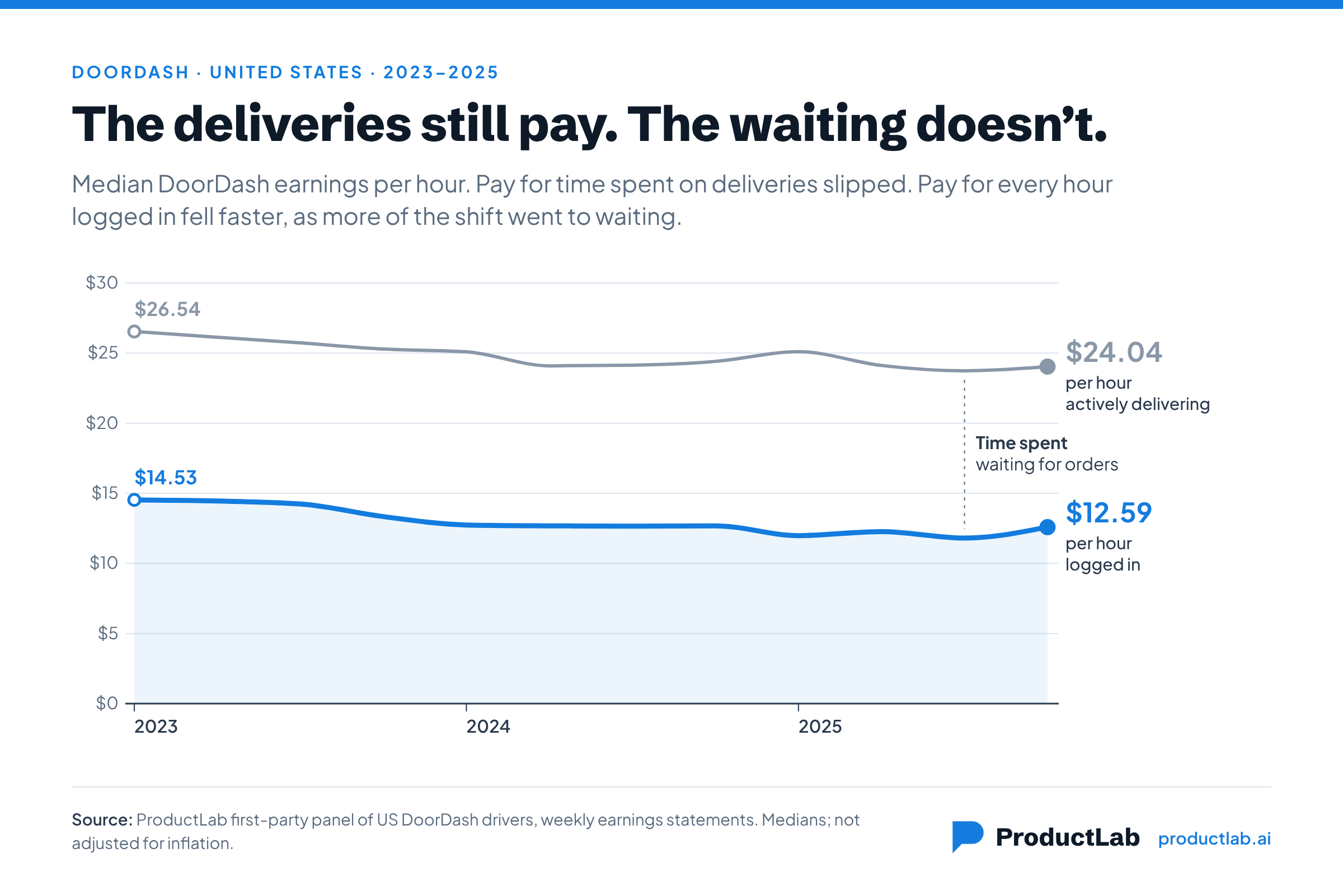
Hourly pay fell about 14% in two years
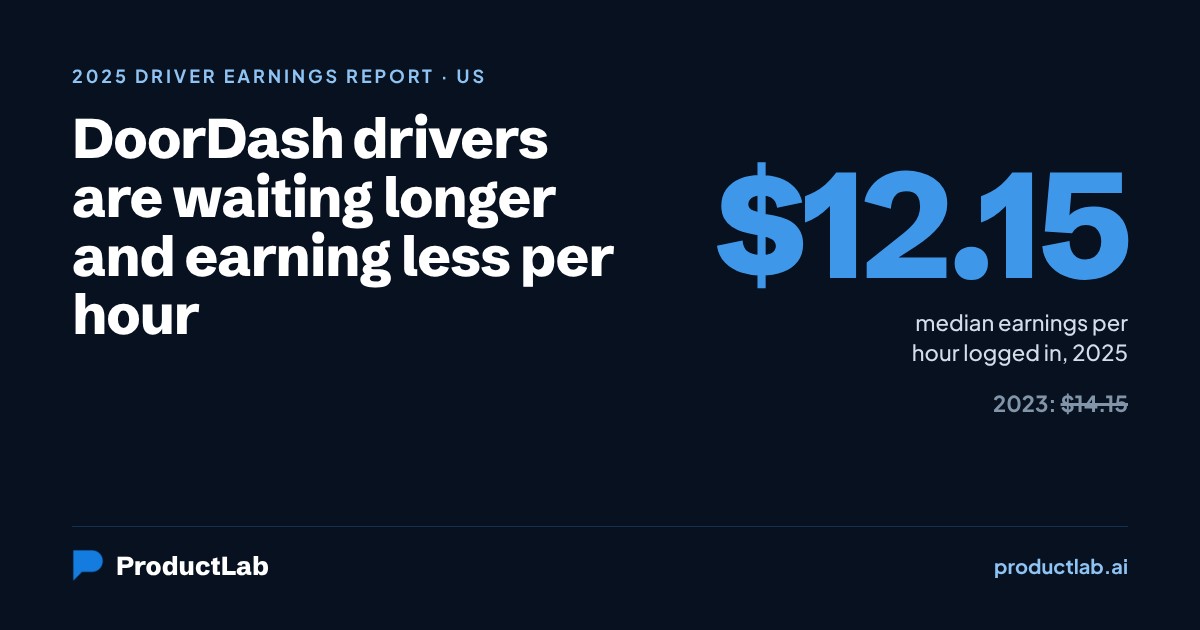
The median US driver earned $12.15 per hour logged in to DoorDash in 2025, down from $14.15 in 2023, a drop of about 14%. Prices rose roughly 6% over the same period, according to the Bureau of Labor Statistics, so in real terms the decline is closer to 19%.
Look only at the time drivers spent actually working on an order, from accepting it to dropping it off, and the picture is calmer: about $24 an hour in 2025 versus $26 in 2023. The gap between those two lines is time spent waiting for the next order, and that gap is getting wider.
Same pay per order, fewer orders per hour
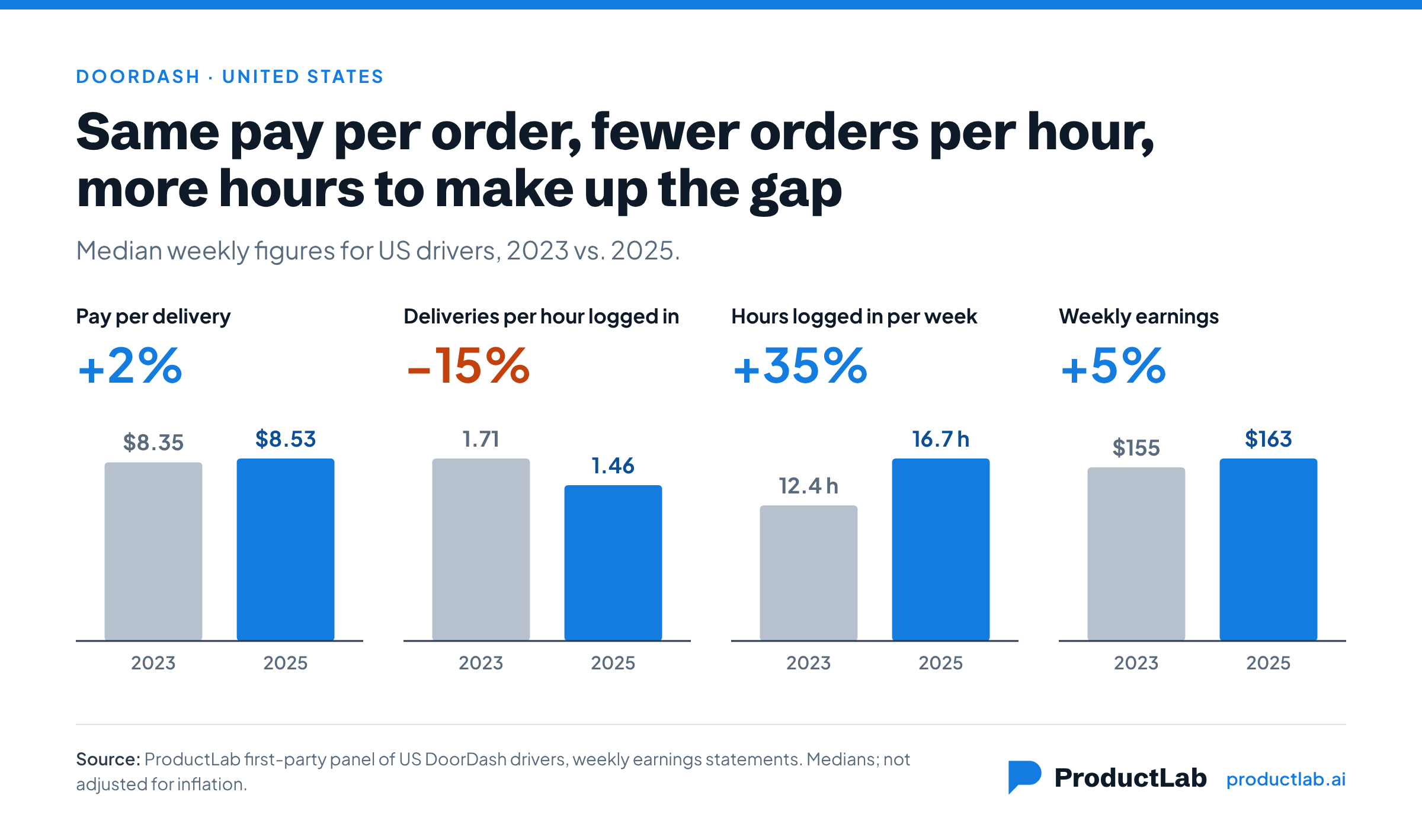
Pay per delivery barely moved. The median delivery paid $8.35 in 2023 and $8.53 in 2025, tips included. The difference is volume: drivers completed a median of 1.71 deliveries per hour logged in during 2023 and just 1.46 in 2025, 15% fewer.
Drivers responded by staying online longer. The median driver-week grew from 12.4 hours logged in to 16.7 hours, about 35% more time on the app, for weekly earnings that rose only from $155 to $163.
This isn’t just a change in who is driving. Among drivers we tracked in both 2023 and 2025, the median driver’s hourly earnings fell 18%, and about three in four earned less per hour logged in than they had two years earlier. Their pay per delivery was unchanged; their deliveries per hour fell by about a fifth.
The share of weeks that paid under $10 per hour logged in rose from about one in four in 2023 to nearly two in five in 2025. Weeks above $20 an hour became rarer, falling from about one in six to one in ten.
Tips are still half the paycheck
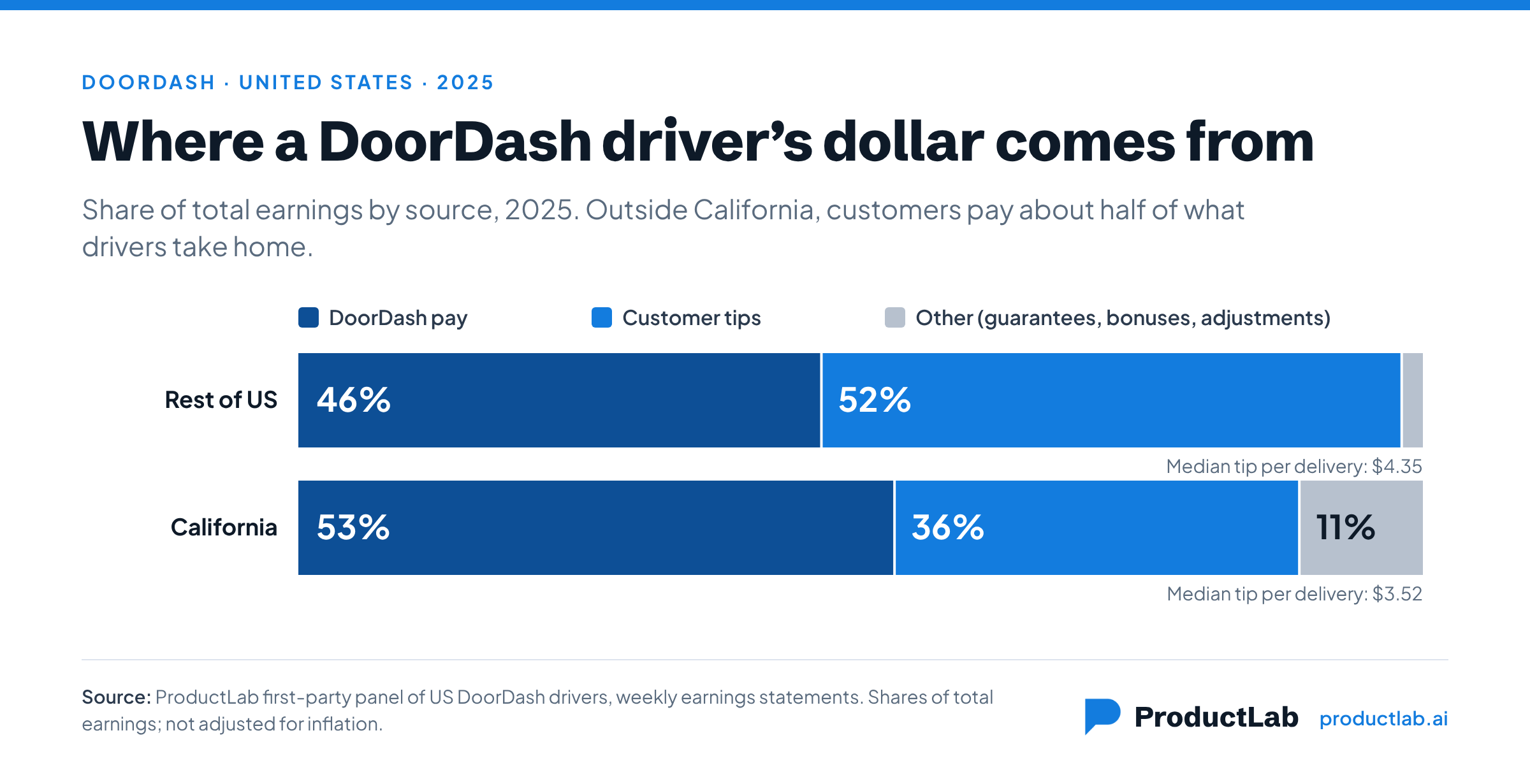
Customers continue to fund a huge share of driver pay. Across the US in 2025, tips made up about 48% of what drivers earned. Outside California the figure was 52%: for every dollar a driver took home, customers paid more of it than DoorDash did. The median tip came to about $4.35 per delivery.
California is the exception. Under Proposition 22, the state’s app-based driver law, DoorDash must top up pay to an earnings floor for time spent on deliveries. In our data, California drivers received more from DoorDash itself and from those top-ups (shown as “other” below), and tips made up only about 36% of earnings. The median tip per delivery there was lower too, about $3.52.
Where drivers earned the most
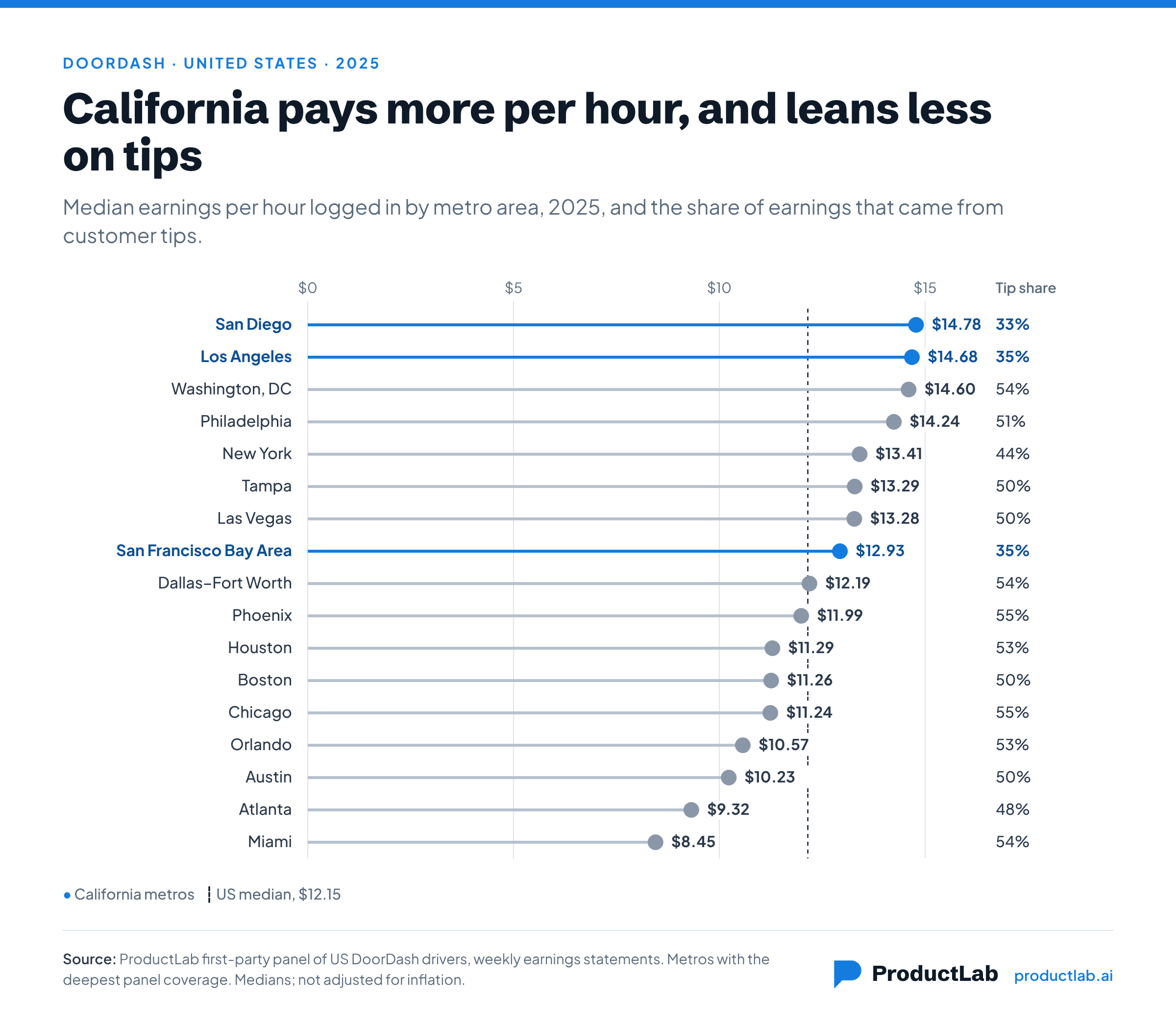
California metros sat at the top of the 2025 rankings. San Diego and Los Angeles drivers earned a median of nearly $14.80 and $14.70 per hour logged in, with Washington, DC and Philadelphia close behind. At the bottom, Atlanta and Miami drivers earned $9.32 and $8.45. Miami’s median was about 30% below the national figure and roughly 40% below Southern California’s.
The tip column is the tell. In most of the country, tips made up around half of earnings. In the three California metros, they made up about a third, because the base pay is higher.
What this means if you drive
- Judge your week by pay per hour logged in, not pay per order. The per-order number looks stable, which hides the real change. Divide your weekly earnings by your total dash time.
- Waiting is the cost to manage. Since the orders themselves pay about the same, the biggest lever is cutting idle time: dashing in your market’s busiest windows and zones, and logging off when it’s slow.
- Know where your money comes from. Outside California, about half of your pay depends on customers choosing to tip, so the offers you accept matter as much as the hours you work.
- Remember these are gross numbers. Gas, maintenance and taxes come out of every figure above, and longer weeks mean more miles.
About the data
This analysis uses data sourced directly from ProductLab’s first-party panel of consumers: US DoorDash drivers who share their weekly earnings statements through the ProductLab app. “Hours logged in” is DoorDash’s dash time; “hours actively delivering” is DoorDash’s active time, from accepting an order to completing it. Earnings include DoorDash pay, customer tips and other payments such as guarantees and adjustments. Figures are medians of driver-weeks, with clearly incomplete or implausible statements removed. Inflation figures use the Bureau of Labor Statistics Consumer Price Index (CPI-U).
Drive for DoorDash, Uber or Instacart? Join the ProductLab panel and get paid to share your earnings.


