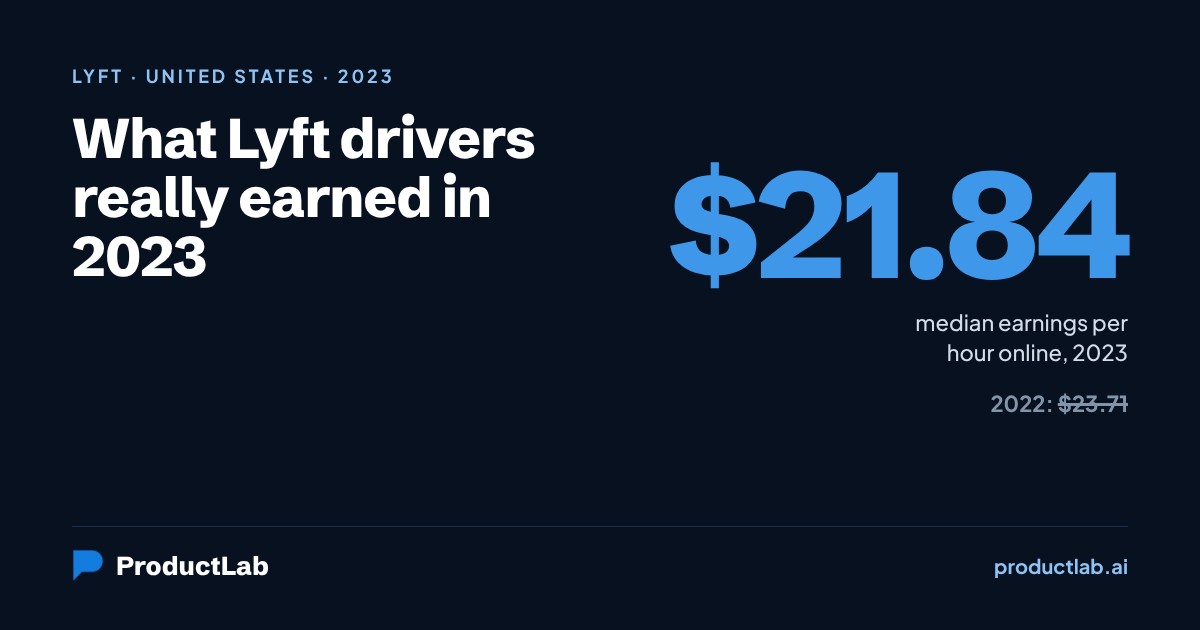
The short version: Lyft drivers in the US earned a median of $21.84 for every hour online in 2023, down about 8% from $23.71 in the second half of 2022. Fares per ride slipped, rides per hour slipped, and bonuses shrank, so drivers stayed online longer to earn a little more each week.
These numbers come from weekly earnings statements sourced directly from ProductLab’s first-party panel of consumers: US Lyft drivers who share their real statements with us. We analyzed thousands of driver-weeks across 2022 and 2023. All figures are medians, before expenses such as gas, and not adjusted for inflation.
Hourly pay drifted down all year
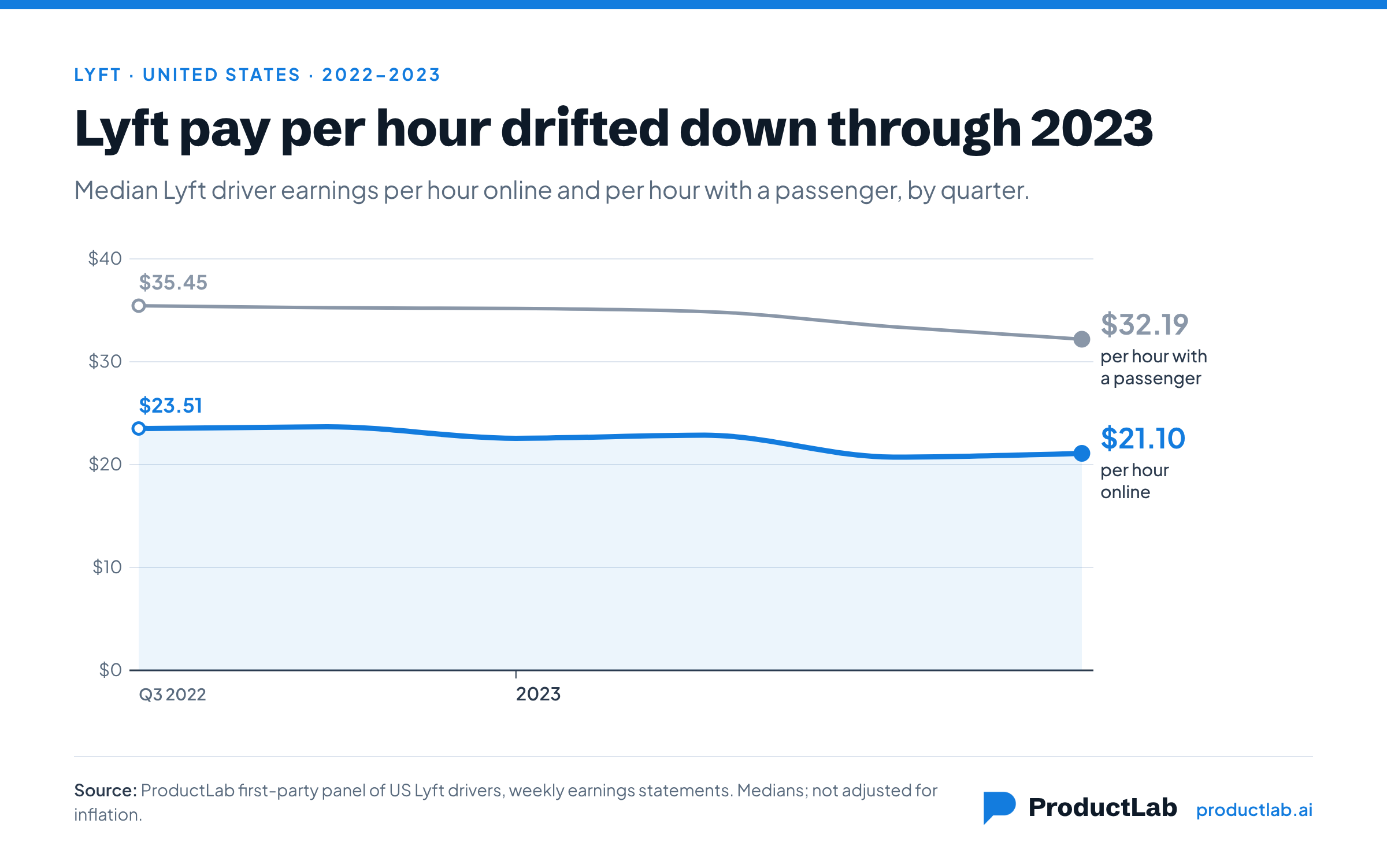
Pay per hour online held near $23.50 through late 2022, then stepped down in 2023, bottoming out at about $20.70 in the third quarter. Pay for the time a driver actually had a passenger in the car fell too, from about $35.50 an hour to $32.20 by the end of the year.
The typical ride paid $12.81 in 2023, versus $13.38 in late 2022. Drivers also completed slightly fewer rides per hour online (1.76, down from 1.81) and spent a smaller share of their online time with a passenger, about 68% versus 72%.
Drivers made up the difference with time. The median driver-week grew from 12 hours online to 13.9 hours, and weekly earnings edged up from $270 to $281. Low-paying weeks became more common: about 22% of 2023 weeks paid less than $15 per hour online, up from 17%, while weeks above $30 an hour fell from one in four to fewer than one in five.
Bonuses shrank; tips stayed small
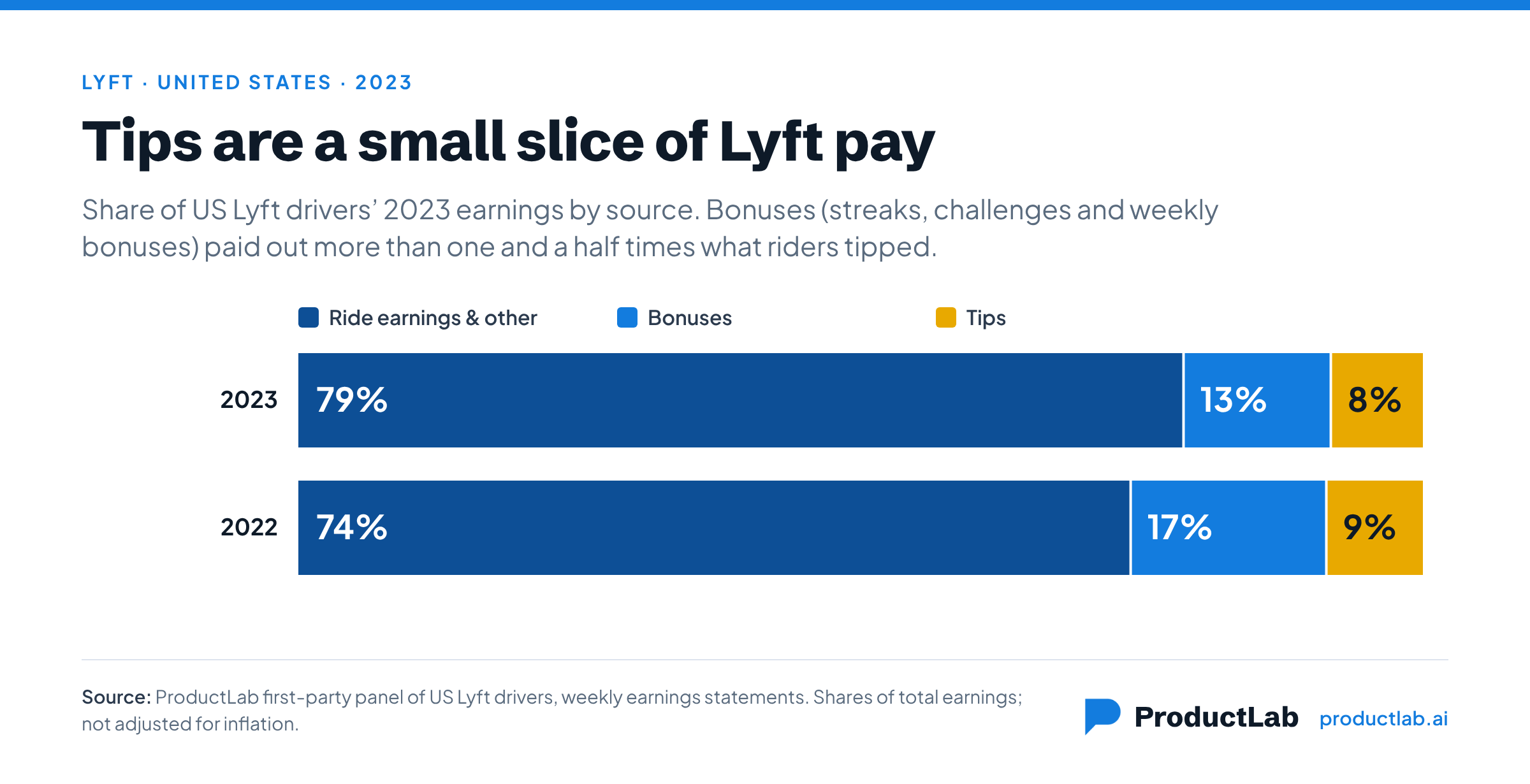
Unlike food delivery, rideshare pay barely depends on tips. Tips made up about 8% of Lyft drivers’ earnings in 2023, even though nine in ten driver-weeks included at least one tip. Bonuses, including streaks, ride challenges and weekly bonuses, mattered more at 13% of earnings, but that was down from 17% in late 2022.
The best and worst cities to drive for Lyft
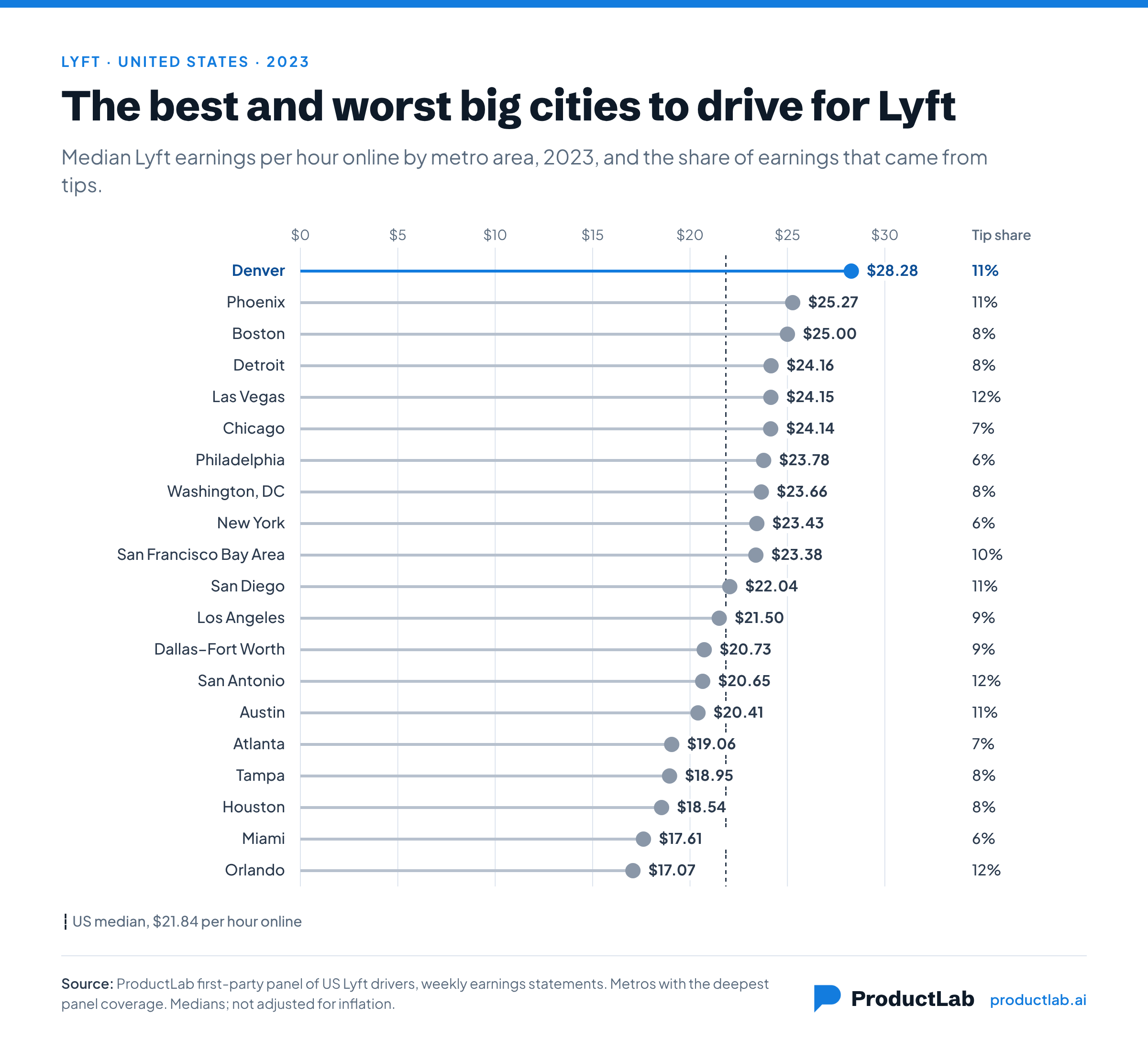
Denver was the standout in 2023, with a median of $28.28 per hour online, well above the national figure. Phoenix and Boston were next at about $25. At the other end, Florida and Texas metros paid least: Orlando ($17.07), Miami ($17.61) and Houston ($18.54).
New York is a special case. Its rides paid by far the most, a median of $19.26 per ride, thanks to the city’s driver pay rules, but longer trips and traffic meant hourly pay ($23.43) landed only slightly above the national median. New York riders also tipped the least, at under 6% of earnings.
What this means if you drive
- Track pay per hour online. Per-ride pay hides how much time you spend waiting between rides.
- Bonuses are worth less than they were. Plan your week around base earnings, and treat streaks and challenges as upside.
- Location matters as much as hours. The gap between the best and worst big metros was more than $11 an hour.
About the data
This analysis uses data sourced directly from ProductLab’s first-party panel of consumers: US Lyft drivers who share their weekly earnings statements through the ProductLab app. “Hours online” and “hours with a passenger” are taken from Lyft’s weekly statements. Earnings include ride earnings, bonuses and tips. Figures are medians of driver-weeks, with incomplete or implausible statements removed. 2022 figures cover the second half of the year.
Drive for Lyft, Uber or DoorDash? Join the ProductLab panel and get paid to share your earnings. Need gig-worker data for your business? Talk to our data team.